Hardwood Mats vs Plastic Ground Protection Mats
Hardwood mats and plastic ground protection mats are both used for temporary access, heavy equipment movement, mud control and surface protection. The better choice depends on load requirement, ground condition, vehicle type, mat size, connection method and how many times the mats need to be reused.
Are plastic ground protection mats better than hardwood mats?
Plastic ground protection mats are often selected when projects need reusable access, easier cleaning, lower water absorption and stable traction. Hardwood mats may still be used for some heavy temporary access jobs. For wet, muddy or repeated-use sites, HDPE or UHMWPE mats can reduce handling and maintenance problems.
RFQ tip
Request Ground Protection Mat Selection Support: send mat size, thickness, load requirement, ground condition, vehicle type, connection method, quantity and destination. These details help compare plastic ground protection mats with hardwood mats for site access and surface protection.
- Mat size and thickness: standard mat size, custom size, required thickness and usable road width.
- Load requirement: vehicle type, axle load, crane, excavator, truck or other heavy equipment.
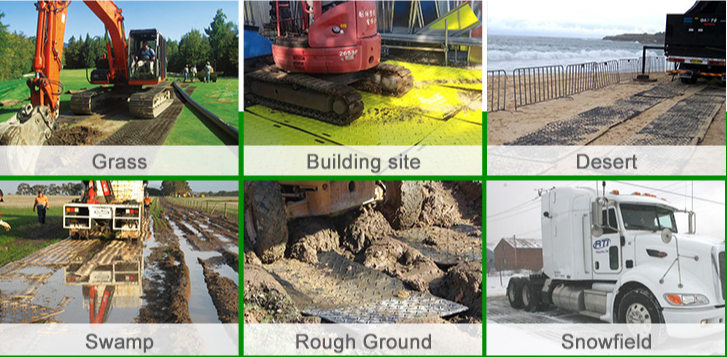
- Ground condition: mud, sand, grass, turf, soft soil, construction site, event site or temporary road.
- Connection method: connector holes, lifting holes, surface traction pattern and anti-slip requirement.
- Order information: quantity, destination and expected use period.
Related options: Ground Protection Mats, Temporary Road Mats, Outrigger Pads and HDPE Sheet.
Ground protection mats can be used as a temporary road to protect the ground and reduce the damage to the ground by heavy facilities.
In daily life, most of the ground protection mats we often see are plywood and ground protection mats. Which of these two materials is better? Let's take a step-by-step comparison of the two protective panels.Both Use ScenariosPlywood is a popular and inexpensive form of floor protection on the market and is available in softwood, hardwood, solid or laminated plywood. It is commonly used in many industrial type environments, such as muddy areas or heavy machinery sites.
HDPE ground protection mat is made of 100% HDPE floor protection pad, which is not easy to be damaged over time, and is more and more suitable for daily and industrial environments, such as temporary road slabs, lawn protection pads, temporary parking pads, etc. .
From the application point of view, the two are similar.Advantages and Disadvantages of BothAs a choice for ground protection, plywood naturally has certain advantages. First, the price is cheap. If it is only for short-term use, plywood is still a better choice. For example, when building a stage on some grounds, use multi-layer plywood at this time. The damage to the ground is also less.
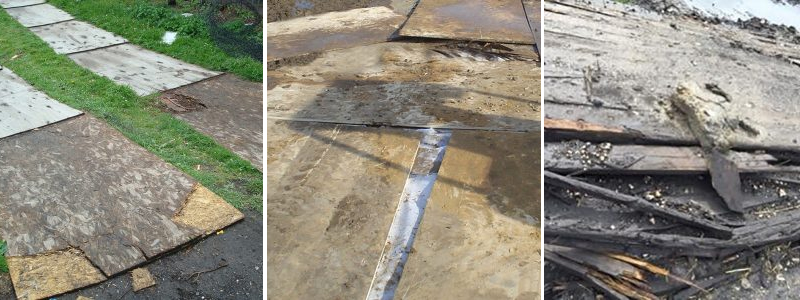
But after such a long time of verification, the problem of plywood has also been exposed:
Poor durability: plywood cannot be used repeatedly, and long-term use of plywood will cause cracking and deformation.
Weight: In most cases, thicker plywood is used to withstand heavy equipment, and such plywood can also be heavy. The problem is worse if it gets wet.
Slippery: Rainy weather can cause the surface of the plywood to become slippery, and machines or equipment may slip on the plywood.
The advantages of composite panels over plywood will be reflected:
Long service life: The protection mat is made of HDPE material, which can be reused and recycled, and is durable.
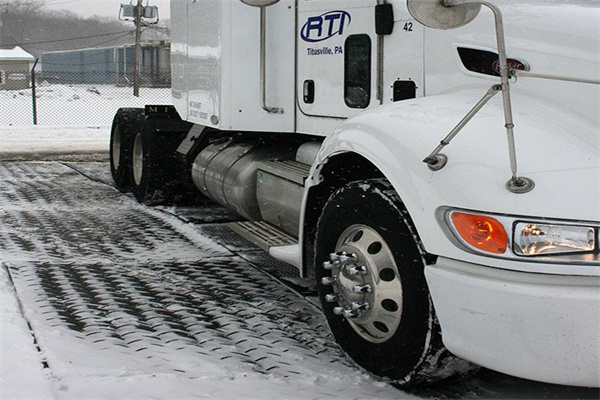
High friction: HDPE ground protection mat have raised nubs on which heavy equipment rides to provide better traction, even when the surface is wet.
Connection holes: There are connection holes on each composite board, and the ground protection boards are connected together by single connection or double connection to play a fixed role, making the composite board more stable.
Load bearing: HDPE ground protection mats can bear up to 100 tons of weight.
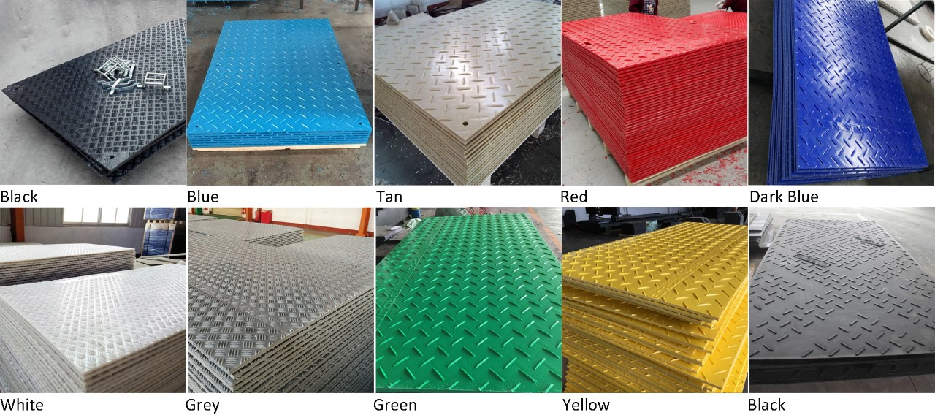
A variety of colors: Black HDPE ground protection mats are the most used in the market, because black ones may be mixed with recycled materials and the price is lower. But if in some occasions such as tunnels, white or bright colors may be more suitable.
In the long run, HDPE ground protection mats are a better ground protection solution than plywood for most projects, and when you use these mats, clients understand that you are invested in the job and that you truly care about their property.
If you have any questions about HDPE ground protection mats, please feel free to contact us.
Back




 Company Introduction