

.jpg)
.jpg)
.jpg)
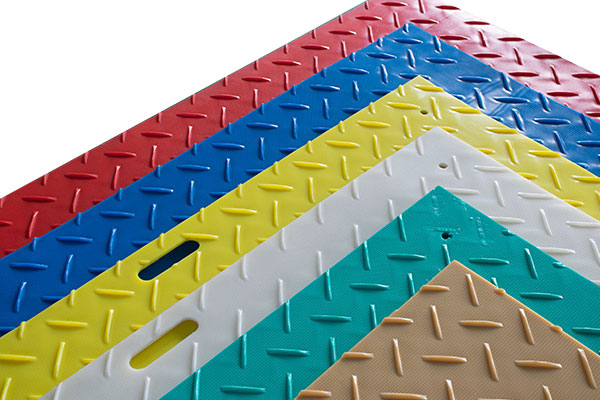
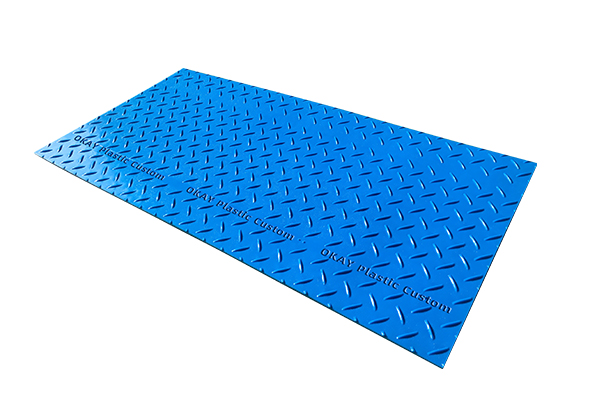
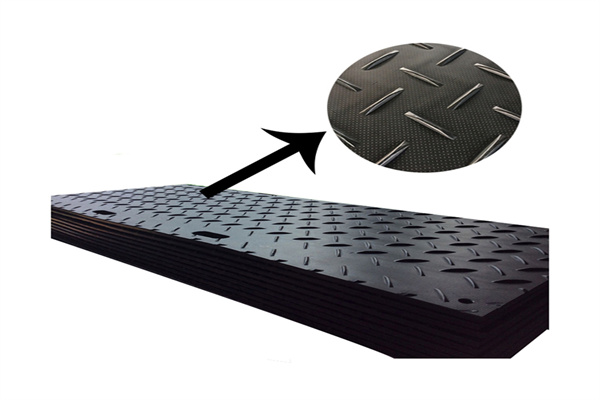
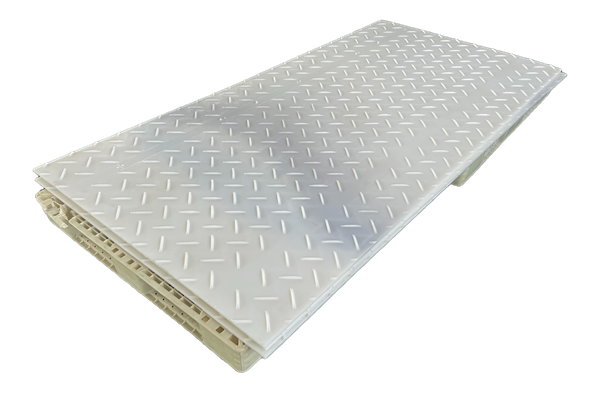
HDPE bog mats provide temporary access roads and stable working platforms on challenging terrain. They are used for construction sites, outdoor events, utilities maintenance, emergency response, military operations and heavy equipment access where reusable ground protection is required.
Compared with wooden bog mats, HDPE mats resist rot, decay and insect damage, require low maintenance and can be reused across multiple projects. They can be reviewed by mat size, thickness, load requirement, terrain condition, connection method and installation needs.
RFQ tip: send load requirement, equipment or vehicle type, terrain condition, mat size, thickness, connector or lifting hole requirement, color or logo request, quantity and destination. If the site includes soft ground, wet ground, uneven terrain or a long access route, include a site photo or simple layout.
Request HDPE Bog Mat Review: include load requirement, vehicle type, terrain condition, mat size, thickness, connector or lifting hole requirement, quantity and destination.
HDPE bog mats are used for temporary roads, pathways, construction platforms, utility work, event access, emergency response, military operations and heavy equipment routes on challenging terrain.
HDPE bog mats resist rot, decay and insect damage, require less maintenance and can be reused multiple times. Wooden mats may have lower initial cost but often need more replacement and maintenance.
Related product pages: ground protection mats, temporary road mats, track mats.
HDPE bog mats provide temporary access roads and stable working platforms on challenging terrain. They are used for construction sites, outdoor events, utilities maintenance, emergency response, military operations and heavy equipment access where reusable ground protection is required.
Compared with wooden bog mats, HDPE mats resist rot, decay and insect damage, require low maintenance and can be reused across multiple projects. They can be reviewed by mat size, thickness, load requirement, terrain condition, connection method and installation needs.
RFQ tip: send load requirement, equipment or vehicle type, terrain condition, mat size, thickness, connector or lifting hole requirement, color or logo request, quantity and destination. If the site includes soft ground, wet ground, uneven terrain or a long access route, include a site photo or simple layout.
Request HDPE Bog Mat Review: include load requirement, vehicle type, terrain condition, mat size, thickness, connector or lifting hole requirement, quantity and destination.
HDPE bog mats are used for temporary roads, pathways, construction platforms, utility work, event access, emergency response, military operations and heavy equipment routes on challenging terrain.
HDPE bog mats resist rot, decay and insect damage, require less maintenance and can be reused multiple times. Wooden mats may have lower initial cost but often need more replacement and maintenance.
Related product pages: ground protection mats, temporary road mats, track mats.
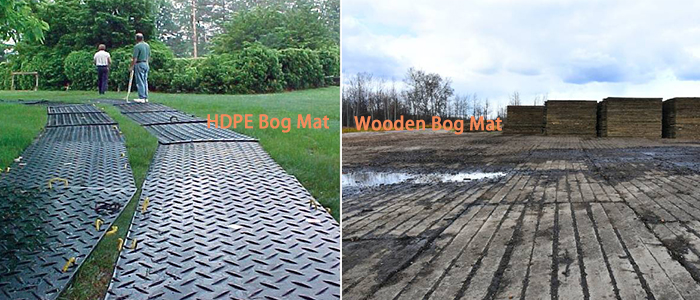
| Advantages | HDPE Bog Mats | Wooden Bog Mats |
| Material | High-Density Polyethylene (HDPE) | Wood |
| Durability | Resistant to rot, decay, and insect damage | Susceptible to rot, decay, and insect damage |
| Weight | Lightweight yet sturdy, easy to transport and install | Heavier, more difficult to transport and install |
| Environmental Impact | Made from recyclable materials, environmentally friendly | May involve cutting down trees, higher environmental impact |
| Lifespan | Longer lifespan, can be reused multiple times | Limited lifespan, may need frequent replacement |
| Maintenance | Low maintenance, does not require treatment or replacement | Requires regular maintenance, treatment, and replacement |
| Cost-Effectiveness | Often more cost-effective in the long run due to durability and reusability | Initial cost may be lower, but higher long-term costs due to maintenance and replacement |
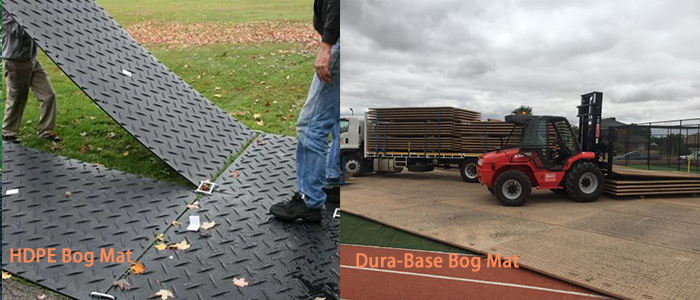
| Advantages | HDPE Bog Mat | Dura-Base Composite Mats |
| Material | High-Density Polyethylene (HDPE) | Composite Material |
| Strength and Durability | Offers excellent strength and durability | May not match HDPE in durability and wear resistance |
| Weight | Lightweight yet sturdy, easy to transport and install | May be heavier than HDPE, making transportation and installation more difficult |
| Environmental Impact | Typically made from recyclable materials, environmentally friendly | May contain non-recyclable materials, higher environmental impact |
| Flexibility | Provides excellent flexibility, adapts to uneven terrain | May not match HDPE in flexibility, less adaptable |
| Cost-Effectiveness | Often more economical than Dura-Base composite mats, higher cost-effectiveness | May be priced higher, relatively lower cost-effectiveness |


 Company Introduction